Repeated Tasks Contributing To Ongoing Shoulder Strain
Sunshine, Australia – March 3, 2026 / Your Story Physiotherapy /
Recovery and Prevention Pathways
Repetitive movements performed in the workplace are a common contributor to shoulder discomfort across a wide range of occupations. Activities such as prolonged desk work, lifting, carrying, reaching, or operating tools can gradually place strain on the shoulder joint and surrounding structures. When these movements are repeated without adequate rest or ergonomic support, irritation and reduced mobility may develop over time. Your Story Physiotherapy highlights the importance of recognising early warning signs, including stiffness, weakness, or persistent aches during daily tasks. Timely physiotherapy assessment can help identify contributing factors and guide appropriate rehabilitation strategies to support recovery and prevent further aggravation. Services such as WorkCover physio Sunshine are available to assist eligible workers in managing workplace-related shoulder concerns, with a focus on restoring function and improving confidence in movement through structured care plans.
Addressing Work-Related Shoulder Discomfort Early
Shoulder pain from work rarely starts with a single moment. It tends to creep in slowly. A bit of soreness at the end of the day. Stiffness when reaching overhead. Discomfort that settles on the weekend, then returns by Wednesday.
Because there’s no obvious injury, many people push through it. Over time, that ongoing strain can turn into a more persistent shoulder problem that starts affecting work, sleep, and confidence using the arm.
Why Repetitive Work Stresses the Shoulders
The shoulder is designed for movement, not constant repetition. It relies heavily on muscle control rather than joint stability. When tasks involve repeated lifting, reaching, sustained postures, or overhead work, the shoulder can be asked to do more than it’s currently prepared for.
This isn’t about poor posture or doing something “wrong.” It’s usually a mismatch between workload and capacity. When the shoulder doesn’t have enough strength or recovery time, symptoms begin to appear.
Common Shoulder Injuries Linked to Repetitive Work
Rotator cuff irritation or tears
The rotator cuff muscles help stabilise the shoulder during movement. Repetitive tasks can overload these muscles, leading to pain, weakness, or difficulty lifting the arm. Smaller tears or irritation often develop gradually rather than from one incident.
Shoulder impingement
This usually presents as pain when lifting the arm, reaching overhead, or performing repeated movements. It’s often linked to reduced shoulder control and strength rather than a structure being “trapped.”
Bursitis
The bursa acts as a cushion in the shoulder. Repeated friction or sustained positions can irritate it, leading to pain, swelling, and discomfort with movement.
These conditions often overlap and respond well to the same principles of rehab.
Early Signs Your Shoulder Is Struggling
Ignoring early warning signs can allow minor issues to build into bigger ones. Common signals include:
- Shoulder pain that worsens as the workday goes on
- Stiffness or discomfort with reaching or lifting
- Reduced strength or hesitation using the arm
- Pain that eases with rest but returns at work
Catching these signs early often shortens recovery time.
Why Rest Alone Isn’t Enough
Rest can reduce pain temporarily, but it doesn’t prepare the shoulder for returning to the same repetitive demands. Once work resumes, symptoms often come back.
Lasting recovery usually requires rebuilding strength, control, and tolerance so the shoulder can cope with repetition again. This is where physiotherapy shifts the focus from short-term relief to long-term function.
Rebuilding Shoulder Strength and Control
Rehabilitation typically starts by restoring comfortable movement, then progresses to strengthening the rotator cuff, upper back, and shoulder muscles that support daily tasks.
The goal is not gym-based performance for its own sake. It’s building enough capacity to lift, reach, push, or hold positions at work without flare-ups. Progression is gradual and based on how the shoulder responds, not arbitrary timelines.
Workplace Modifications That Support Recovery
Rehab works best when it’s supported by sensible workplace changes. These may include:
- Adjusting work height or reach distances
- Modifying tool or equipment positioning
- Rotating tasks to reduce constant repetition
- Breaking prolonged tasks into manageable blocks
These changes are often temporary and designed to support recovery, not limit long-term work ability.
Linking Rehab With Safe Work Practices
Physiotherapy and workplace modifications work together. Strength improves the shoulder’s tolerance, while adjustments reduce unnecessary strain during recovery.
This combination helps people stay at work safely while rebuilding capacity, rather than stopping work completely or pushing through worsening pain.
Preventing Ongoing Shoulder Problems
Preventing recurrence comes down to maintaining shoulder capacity. This includes:
- Ongoing strength and mobility habits
- Responding early to flare-ups
- Managing workload increases gradually
Understanding how much the shoulder can tolerate helps prevent small issues from becoming chronic problems.
Getting Back to Work Without Constant Shoulder Pain
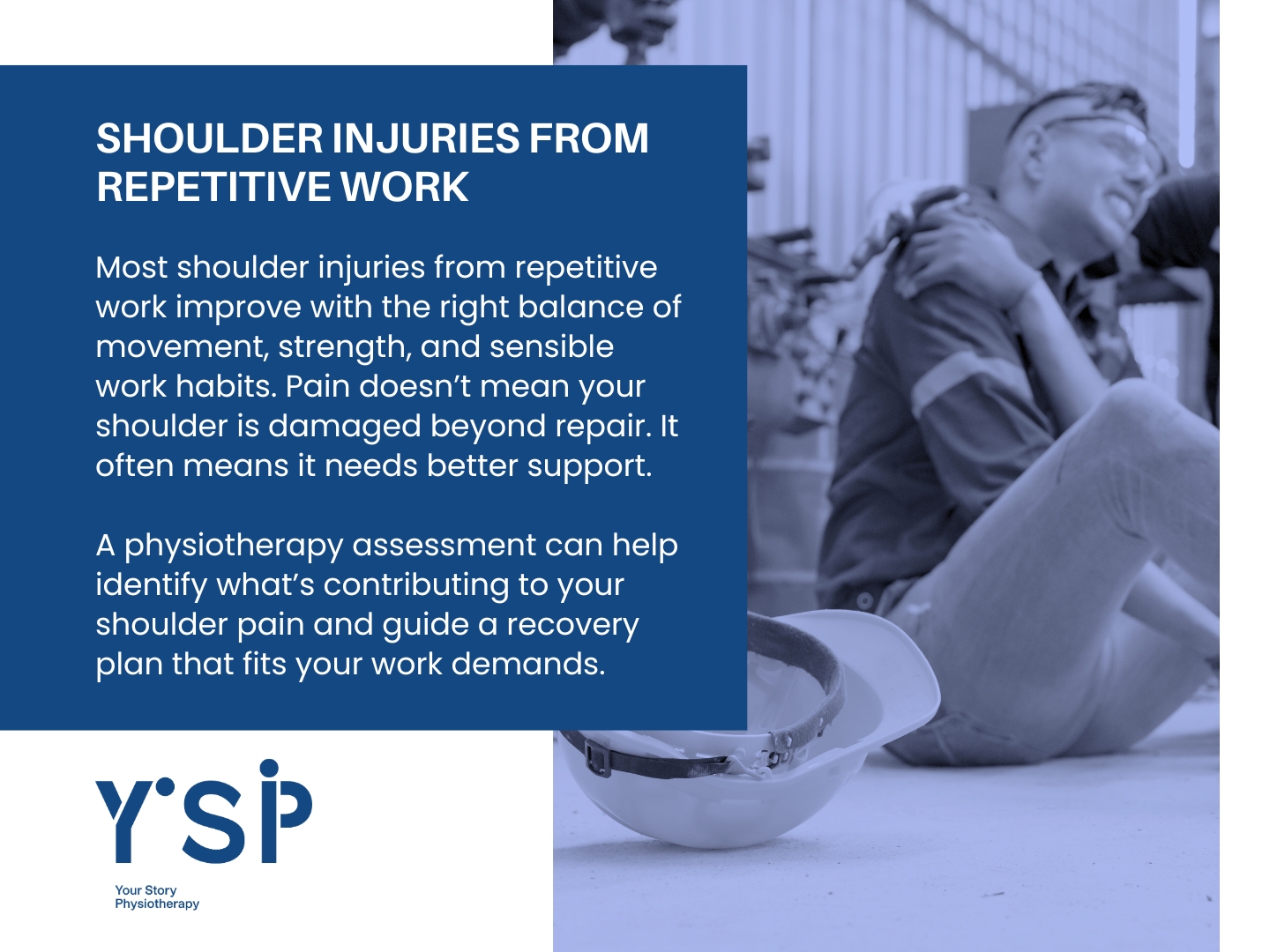
Most shoulder injuries from repetitive work improve with the right balance of movement, strength, and sensible work habits. Pain doesn’t mean your shoulder is damaged beyond repair. It often means it needs better support.
A physiotherapy assessment can help identify what’s contributing to your shoulder pain and guide a recovery plan that fits your work demands.
Support Stronger, Safer Shoulder Movement
 Sunshine is a well-established suburb in Melbourne’s western corridor, recognised for its multicultural community, accessible public transport links, and growing healthcare services. Your Story Physiotherapy provides physiotherapy services within Sunshine and surrounding suburbs, supporting local residents with accessible and community-focused care.
Shoulder injuries associated with repetitive work demands can interfere with daily activities and occupational performance if not addressed appropriately. Understanding contributing factors and implementing suitable rehabilitation strategies can support improved movement and reduce the likelihood of ongoing discomfort. Your Story Physiotherapy provides comprehensive physiotherapy services for individuals experiencing shoulder concerns, including WorkCover physiotherapy Sunshine for eligible workplace injuries. To learn more about Shoulder Injuries From Repetitive Work: Why They Happen and How to Recover, or to arrange a consultation, contact Your Story Physiotherapy for further information and guidance tailored to your circumstances.


Contact Information:
Your Story Physiotherapy
149-153 Anderson Rd
Sunshine, VIC 3020
Australia
Abraam Mikhail
https://yourstory.physio/


Original Source: https://yourstory.physio/shoulder-injuries-from-repetitive-work/