NEW YORK, NY, UNITED STATES, November 12, 2026 /EINPresswire.com/ — The cultural and operational design of executive travel within international financial capitals is experiencing a permanent structural realignment as multi-market consultants, technology vendors, and enterprise auditors actively reject traditional, multi-borough commuting friction. According to market data published in the 2026 Global Business Travel Forecast by the Global Business Travel Association (GBTA), global business travel expenditures are pacing toward a historic $1.70 trillion baseline. However, the report highlights a profound internal shift in executive traveler sentiment: roughly 63% of high-yield road warriors now demand overnight accommodations situated entirely within walking distance of their primary daytime operational targets to mitigate professional burnout. This behavioral evolution is forcing enterprise travel procurement officers to reallocate corporate budgets away from distant, high-congestion urban midtown cores in favor of highly localized, neighborhood-embedded commercial hubs.
This conscious focus on localized efficiency and micro-mobility is changing how corporate travel managers evaluate the Manhattan hospitality grid. When tracking corporate lodging allocations and sorting premium financial district new york hotels business travel planners are systematically adjusting their geographic search parameters to eliminate unnecessary subway transfers and surge-priced rideshares. Industry analytics from Business Travel News indicate that a new generation of corporate specialists is actively rewriting the classic corporate stay, prioritizing frictionless morning transits that protect billable hours while ensuring seamless bicoastal remote work continuity. By anchoring their traveling delegations directly within Lower Manhattan’s historical grid, organizations can contain travel and expense (T&E) overruns while preserving their team’s psychological capital during demanding multi-day auditing and deployment cycles.
The distinct architectural and lifestyle ecosystem of the Financial District (FiDi) serves as a functional framework for this casual corporate travel model. Characterized by its dense network of historic alleys, avant-garde waterfront developments, and pedestrian-only corridors, this sub-market has successfully traded old-school, suit-and-tie corporate posturing for a more rugged, authentic local culture. Visiting financial consultants and tech vendors are systematically abandoning the stuffy, clinical lounge environments of midtown for close-range post-work decompression. Traveling cohorts can transition instantly from high-stakes boardroom deals to unwinding over craft pints along the historic cobblestones of Stone Street, or capturing panoramic sunset views at the Pier 17 entertainment complex, establishing an active evening routine that mirrors the lifestyle of true Manhattan residents.
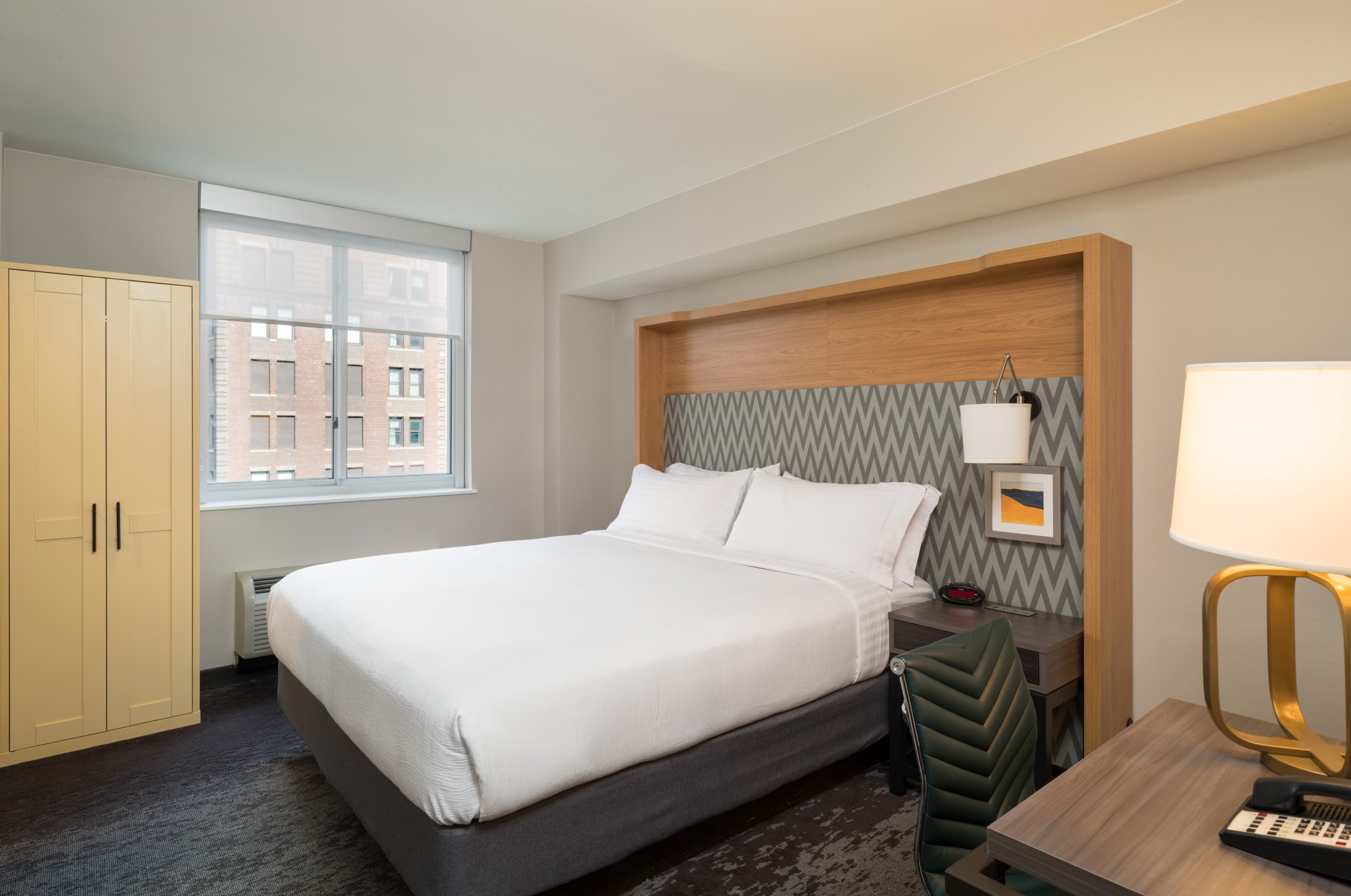
Hospitality assets positioned at the absolute center of this historic banking grid are configuring their service delivery to operate as agile command centers for these incoming corporate road warriors. The Holiday Inn New York City – Wall Street functions as an empirical case of a property structurally aligned with these changing enterprise travel patterns. Situated securely at 51 Nassau Street, the hotel allows corporate travelers to close their laptops and step out into Lower Manhattan’s premier post-work decompression spaces within seconds. By providing high-speed digital infrastructure alongside an optimized corporate basecamp model just a two-minute pedestrian path from the Wall Street subway station, the property cuts out morning transit drama entirely, enabling visiting corporate specialists to execute rigorous remote logs and street-level networking within a single unified framework.
Technical Property Blueprint
The architectural layout of the Holiday Inn New York City – Wall Street comprises a contemporary 20-story urban high-rise structural design originally developed in 2010 to maximize spatial utility within Manhattan’s historic financial center. The property houses a total inventory of 113 clean, modern, and non-smoking guest accommodations systematically engineered to support remote business workflows and extended corporate assignments:
– Room Inventory Distribution: Configurations are distributed across Standard King Rooms, 1 Full Bed Standard Rooms, Executive King configurations, and Double Rooms featuring two double beds optimized for multi-person corporate travel blocks.
– In-Room Executive Infrastructure: Guest rooms average between 150 and 200 square feet of optimized urban layout, featuring dedicated laptop-friendly workspaces, ergonomic executive seating, integrated digital plug-in connectivity panels, and high-speed wireless internet routing.
– Standard Room Amenities: Every individual guest unit is standardly outfitted with independent climate control hardware, in-room safety deposit boxes, mini-refrigerators, coffee and tea makers, dual-line cordless telephones with voicemail interfaces, and flat-screen televisions with premium digital cable and satellite programming.
– On-Site Functional Assets: Encompasses a 24-hour self-service business center equipped with secure document processing and printing hardware, a dedicated fitness center furnished with contemporary cardiovascular training machinery, guest laundry facilities, a 24-hour front desk operation, and contactless digital check-in protocols.
Laurean Love
HHM Hotels
+1 215-238-1046
email us here
Visit us on social media:
LinkedIn
Other
Legal Disclaimer:
EIN Presswire provides this news content “as is” without warranty of any kind. We do not accept any responsibility or liability
for the accuracy, content, images, videos, licenses, completeness, legality, or reliability of the information contained in this
article. If you have any complaints or copyright issues related to this article, kindly contact the author above.

Media gallery