The Connection Powering UCaaS, Microsoft Teams, and Distributed Workforce Collaboration
Alpharetta, United States – March 11, 2026 / SIPTRUNK /
SIP trunking has become the foundational technology enabling modern unified communications, connecting voice, video, and messaging into seamless business platforms.
-
The UCaaS market reached $84.90 billion in 2025 and is projected to grow at a 19.28% CAGR through 2035, driven largely by SIP-enabled infrastructure.
-
Microsoft Teams integration through SIP Direct Routing has become standard for enterprises seeking carrier-grade voice within their collaboration platforms.
-
Remote and hybrid workforces depend on SIP trunking to maintain consistent communication experiences across devices and locations.
Resellers who understand the SIP-UC connection position themselves to capture recurring revenue in an expanding market.
The UCaaS sector reached $84.90 billion in 2025 and continues expanding as organizations consolidate their communication tools into integrated platforms. At the center of this shift sits SIP trunking technology, which serves as the connective tissue between traditional voice infrastructure and modern cloud-based collaboration environments.
Telecommunications resellers, IT consultants, and managed service providers recognize that SIP trunking and unified communications work together to create an attractive business opportunity. Organizations are actively seeking partners who can bridge their existing phone systems with platforms like Microsoft Teams, Zoom, and other UCaaS solutions. This convergence creates demand for knowledgeable resellers who can deliver integrated communication solutions that support distributed workforces.
What Is the Connection Between SIP Trunking and Unified Communications?
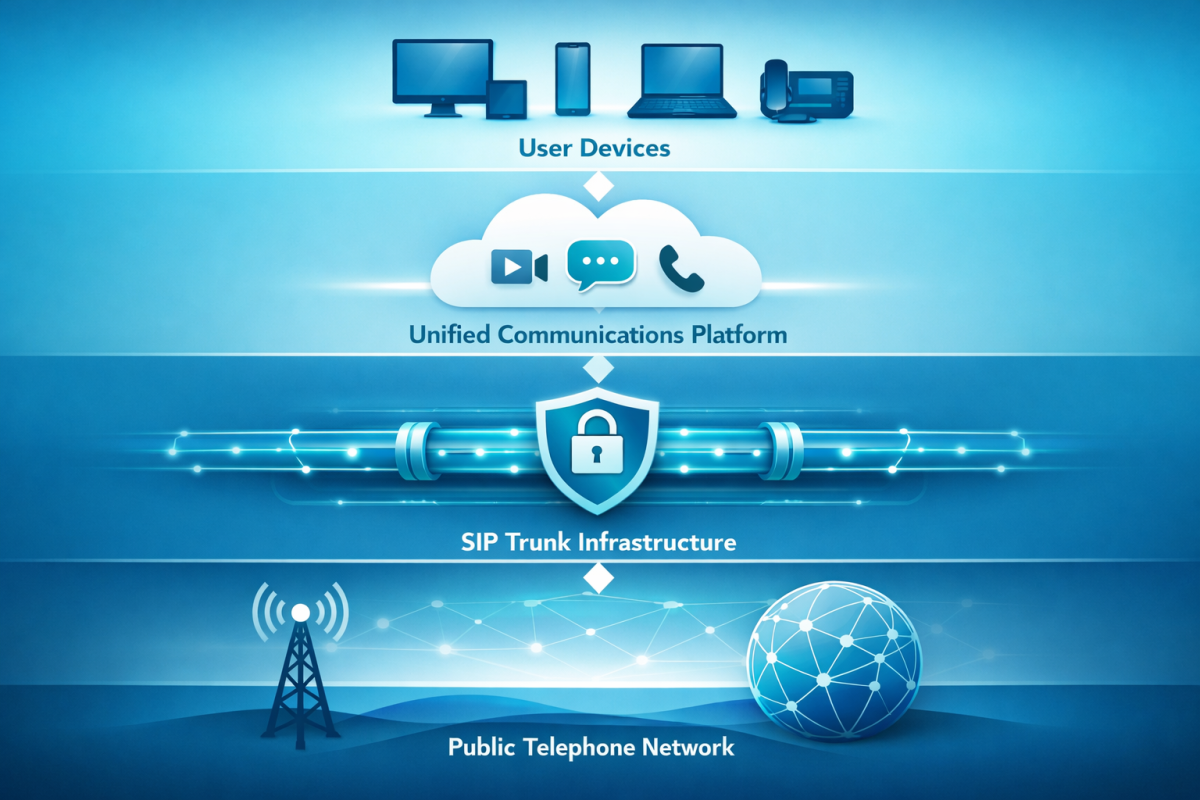
Session Initiation Protocol trunking provides the signaling framework that enables unified communications platforms to function. While UC platforms deliver the user-facing features, such as video conferencing, instant messaging, and presence indicators, SIP trunking handles the underlying connectivity that makes external calling possible. This relationship positions SIP as the infrastructure layer upon which UC capabilities are built.
Businesses can maintain their preferred collaboration tools while leveraging SIP infrastructure for connections to the public switched telephone network. Voice calls initiated from a Teams client, for example, travel through SIP trunks to reach external phone numbers. Video conferences that include dial-in participants rely on the same SIP connectivity. This architecture allows organizations to modernize their communications without abandoning investments in existing systems or forcing employees to adopt entirely new workflows.
SIP protocols support video sessions, file transfers, and presence data, creating a standards-based foundation for comprehensive unified communications deployments. For resellers, a single SIP trunking relationship can enable multiple revenue-generating services within a client’s organization.
How Does SIP Trunking Enable UCaaS Integration?
Cloud-based unified communications platforms have become the preferred delivery model for enterprise collaboration tools. These UCaaS SIP solutions combine telephony, video, messaging, and team collaboration into subscription-based services that eliminate the need for on-premises infrastructure. SIP trunking serves as the voice connectivity component that completes these platforms.
Seamless Platform Connectivity
Modern SIP providers offer pre-built integrations with major UCaaS platforms, enabling straightforward deployment without complex custom configurations. Businesses can connect their existing PBX systems to cloud collaboration tools through SIP trunks, creating hybrid environments that preserve current investments while adding new capabilities. This flexibility proves valuable for organizations with substantial telephony infrastructure that can’t justify immediate replacement.
The integration process typically involves configuring SIP trunks to route calls between the UCaaS platform and the PSTN. Once established, users experience unified communication across their devices without awareness of the underlying technical architecture. Calls, messages, and meetings flow seamlessly regardless of whether participants connect through desk phones, mobile applications, or desktop clients.
Eliminating Communication Silos
Organizations historically maintained separate systems for voice, video, messaging, and conferencing. This fragmentation created inefficiencies as employees switched between applications and struggled to maintain conversation continuity across channels. SIP-enabled unified communications eliminate these silos by consolidating communication tools into cohesive platforms where voice calls can escalate to video conferences, chat conversations can transition to voice, and all interactions remain logged within unified systems.
IT teams manage a single communication platform rather than multiple disconnected systems, reducing complexity and support requirements. Resellers who deliver these consolidated solutions provide measurable value through simplified management and reduced total cost of ownership for their clients.
Why Is SIP Essential for Microsoft Teams and Collaboration Platforms?
Microsoft Teams has emerged as a dominant collaboration platform, with organizations worldwide standardizing on its chat, meeting, and file-sharing capabilities. However, Teams requires external connectivity to function as a complete phone system replacement. SIP trunking provides this connectivity through several integration methods that accommodate different organizational requirements.

Direct Routing is the most flexible approach, allowing businesses to connect their own SIP trunks to Teams through certified session border controllers. This method provides carrier choice, enabling organizations to select providers based on pricing, coverage, and feature requirements rather than accepting a single vendor’s telephony services. For resellers, Direct Routing creates opportunities to deliver SIP trunking services to Teams-centric organizations that want control over their voice connectivity.
Operator Connect offers a Microsoft-managed alternative where certified carriers appear directly within the Teams admin center. Organizations select their preferred carrier and provision numbers without deploying session border controllers. Both approaches rely on SIP trunking as the underlying technology connecting Teams to external phone networks. According to Fortune Business Insights, 83% of workers prefer hybrid arrangements, which has accelerated UCaaS adoption and the demand for seamless Teams telephony integration.
The device flexibility enabled by SIP-based Teams integration supports modern work patterns. Employees access the same business phone functionality from smartphones running the Teams mobile application, laptops using the desktop client, traditional desk phones, or browser-based softphones. Calls transfer seamlessly between devices, and presence information remains consistent across platforms. This consistency matters for organizations with distributed teams who require professional communication capabilities regardless of physical location.
What Role Does SIP Trunk for Collaboration Play in Remote Work?
Hybrid and remote work arrangements have changed communication requirements. Employees expect full business phone functionality from home offices, co-working spaces, and mobile locations. SIP trunking delivers this capability by decoupling communication from physical infrastructure, enabling voice and collaboration services anywhere internet connectivity exists.
Geographic independence is a primary advantage. Traditional phone systems required physical presence for complete functionality, limiting remote workers to basic call forwarding or personal mobile phones. SIP-enabled unified communications provide consistent experiences regardless of location. Remote employees access the same features as their office-based colleagues, including advanced call handling, conference calling, CRM integration, and collaboration tools.
Advanced call routing capabilities further support distributed teams. Incoming calls reach appropriate team members based on availability, time zone, skill sets, or custom business rules rather than static desk phone assignments. Calls can ring simultaneously on multiple devices or follow sequential patterns until answered. These routing options ensure customer calls receive prompt attention even when teams span multiple locations and time zones.
The scalability inherent in VoIP integration proves essential for organizations with fluctuating workforce sizes. Adding remote employees requires no physical line installation or hardware deployment. Administrators provision new users through online portals, and employees begin making calls within minutes. This agility allows businesses to respond quickly to changing conditions without the delays and costs associated with traditional telephony infrastructure.
Key Benefits of SIP Trunking for Unified Communications
Resellers presenting SIP-enabled unified communications solutions to prospective clients should emphasize the concrete advantages these technologies deliver:
-
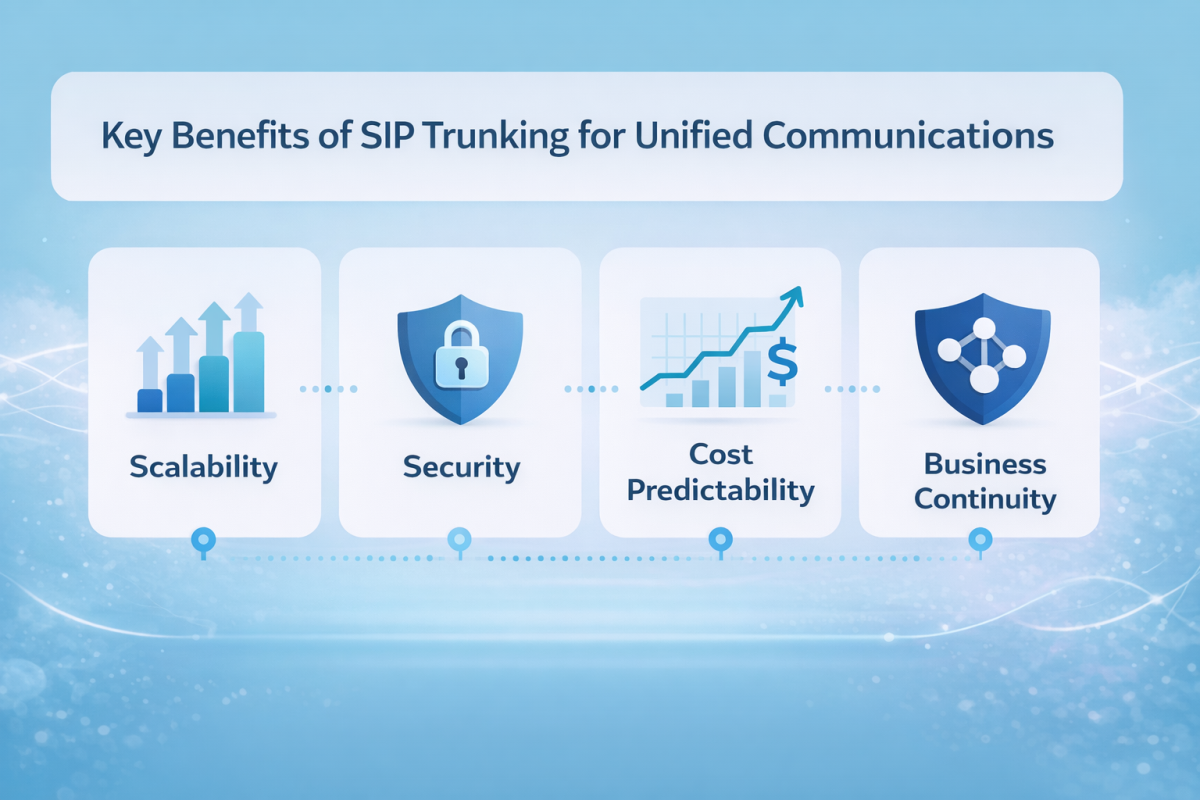
Infrastructure consolidation reduces operational complexity by combining voice, video, and messaging onto shared network resources, eliminating redundant systems and simplifying management.
-
Predictable cost structures replace usage-based long-distance charges with inclusive calling plans, enabling accurate budgeting and reducing overall communication expenses.
-
Instant scalability allows businesses to add or remove capacity on demand without hardware purchases, technician visits, or extended provisioning timelines.
-
Enhanced security through TLS encryption for signaling and SRTP for media streams protects business communications from interception, while fraud detection systems monitor for suspicious call patterns.
-
Business continuity capabilities enable automatic failover to backup systems during outages, ensuring communication availability even when the primary infrastructure experiences problems.
-
Application integration connects voice communications with CRM platforms, helpdesk systems, and productivity applications, enabling features like click-to-call, automatic call logging, and screen pops with customer information.
What Should Resellers Consider When Offering VoIP Integration Services?
Successfully delivering unified communications solutions requires careful evaluation of provider partnerships and client requirements. Resellers should assess potential SIP trunking providers based on network reliability, feature depth, technical support quality, and program flexibility.
Uptime guarantees matter because voice services demand higher reliability than typical internet applications. Dropped calls and audio quality problems damage client relationships and reflect poorly on the reseller who recommended the solution. Providers with redundant infrastructure, multiple carrier relationships, and proven track records reduce these risks.
Feature compatibility with target UC platforms determines which client opportunities a reseller can pursue. Providers offering certified integrations with Microsoft Teams, verified interoperability with major PBX systems, and support for emerging collaboration platforms position resellers to address diverse client requirements.
White-label options and flexible pricing models affect profitability and client retention. Programs that allow resellers to present services under their own brand while maintaining competitive margins create sustainable business models. Recurring revenue structures align reseller incentives with ongoing client success rather than one-time transactions.
Frequently Asked Questions
Can SIP trunking work with existing PBX systems? Yes, SIP trunking connects with most modern PBX systems, including IP-based, hybrid, and legacy systems equipped with SIP gateways. This compatibility allows organizations to add unified communications capabilities without replacing functional phone system investments.
What UC features does SIP enable beyond voice calling? SIP protocols support video conferencing, instant messaging, presence information, screen sharing, and file transfer in addition to voice. These capabilities integrate within unified platforms to provide comprehensive collaboration functionality through a single infrastructure.
How does SIP-based unified communications improve customer experience? Integrated communications enable faster response times through intelligent call routing, provide agents with customer context through CRM integration, and allow seamless escalation between channels. Customers reach appropriate resources quickly and receive consistent service regardless of how they initiate contact.
Delivering Unified Communications Excellence
The relationship between SIP trunking and unified communications is one of the most significant opportunities in business telecommunications. Organizations increasingly demand integrated platforms that combine voice, video, and collaboration while supporting distributed workforces. Resellers equipped to deliver these solutions capture recurring revenue streams in a market experiencing sustained double-digit growth.
SIPTRUNK provides the reseller-focused platform that enables telecommunications agents, IT consultants, and managed service providers to deliver enterprise-grade unified communications solutions under their own brand.


Contact Information:
SIPTRUNK
3005 Royal Blvd S. Ste 120
Alpharetta, GA 30022
United States
Mitch Kahl
https://www.siptrunk.com/